If you live in New Brunswick, you already know winter doesn’t take it easy on homes. Strong winds, heavy snow, and thick ice buildup put constant stress on anything mounted to the outside of a house. One area that often gets overlooked is the main electrical service. Every year, we see preventable damage that turns into emergency calls in the middle of freezing temperatures. The good news is that there is a simple visual check homeowners can do to reduce that risk.
The main electrical service is the point where NB Power connects electricity to your home. On most houses, this includes the service mast, which is the vertical pipe running up from the meter; the meter socket, which holds the power meter; and the wiring that feeds into the main panel inside. When you look at the meter on the side of your house, you are looking at the heart of your electrical system. If that connection is compromised, the entire home is affected.
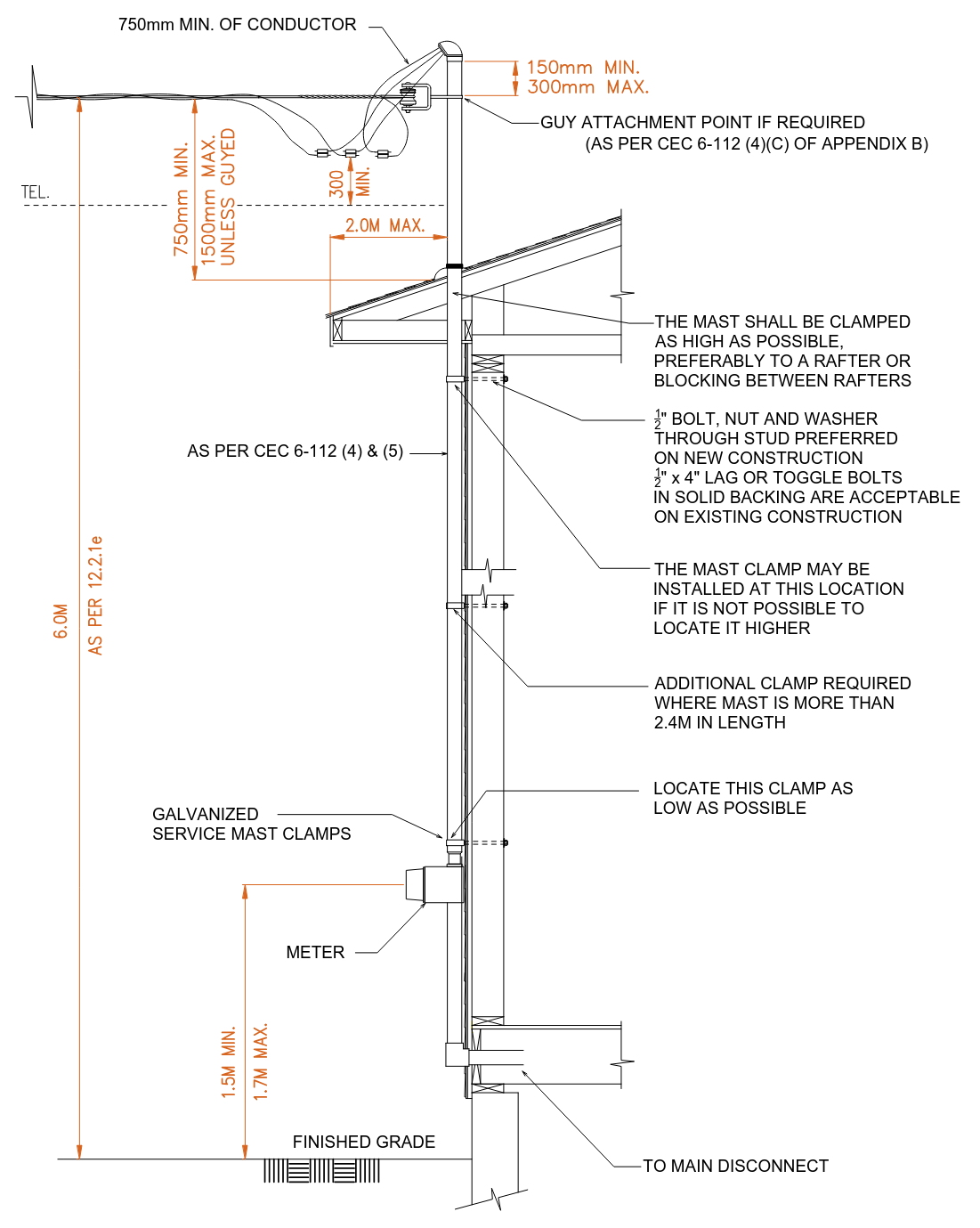
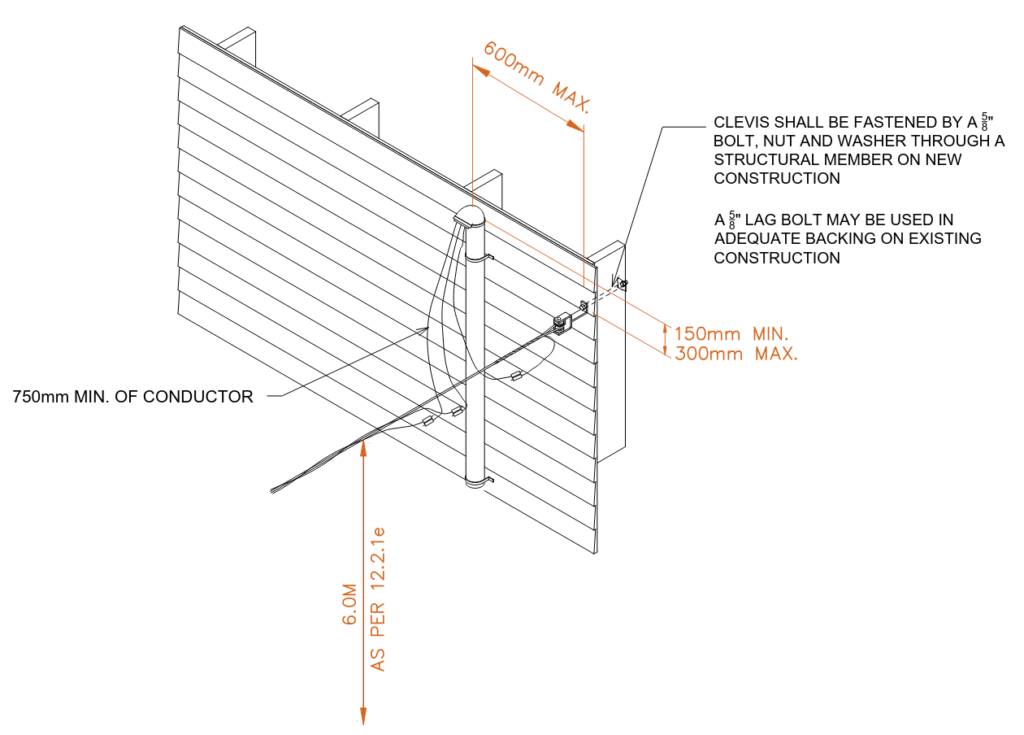
NB Power provides clear standards for service installations. Their guidelines (above) outline how masts must be supported and how meter sockets must be mounted to withstand environmental stress. These standards are developed with our climate in mind. When installations follow those requirements, they perform far better during harsh weather conditions. When shortcuts are taken or equipment is not properly reinstalled after siding work, winter conditions quickly reveal the weaknesses.
What can cause problems?
We frequently see issues arise after homes have been re-sided. During siding replacement, contractors often need to work around the mast and meter base. In some cases, the straps are removed and not properly reinstalled. In other situations, the meter socket is loosened or even pried away from the wall so siding can be installed behind it. This makes the finished siding look clean, but the electrical equipment must be properly re-secured afterwards, and that isn’t always the case. Everything may appear fine during the warmer months when the siding job was done, but winter exposes weaknesses. Ice accumulation on overhead lines increases weight and tension. Wind causes those lines to sway and pull against the mast. If the mast shifts because it lacks proper support, that movement stresses the meter base. Over time, the meter socket can loosen, pull away from the wall, or suffer internal damage. That is when homeowners experience flickering power, arcing, or a complete loss of service.
A more obvious and visible problem is trees. If a tree falls directly on a service line, properly installed straps may not cope with that stress, regardless how well they were installed. However, most service failures are not caused by fallen trees — they result from gradual stress due to wind and ice. In these more common scenarios, proper strapping and secure mounting can make a noticeable difference and may prevent damage altogether.
Underground services
Some homeowners assume that underground services are immune to these types of problems. While underground feeds eliminate overhead line tension, the meter socket still needs to be mechanically secure and properly sealed. If siding work compromises the attachment point, the installation is still at risk. The structural integrity of the meter base remains just as important.
Winter conditions amplify small issues. Cold temperatures make materials more brittle. Fasteners can loosen as materials expand and contract through freeze-thaw cycles. Wind applies repeated force over time. What may seem like minor movement in September can become significant by January. The combination of cold, ice, and wind places constant stress on anything not firmly secured.
A real-life example

The photo above shows a recent call involving an underground service where the siding had been replaced. The meter base had been pulled away from the wall during the siding installation and was never properly secured afterwards. Over time, minor movement and seasonal changes caused it to loosen further. Fortunately, the issue was discovered before a major storm hit. The repair will involve removing the meter base, installing proper backing, securing it firmly to the structure, and sealing it correctly to prevent moisture intrusion. Addressing it now avoids what could have been a far more complicated situation during extreme weather.
Warning signs
There are a few warning signs that indicate it may be time to have the service checked. Visible gaps between the meter base and the wall, missing mast straps, loose conduit, corrosion, or signs of water entry around the meter are all worth investigating. Power flickering during windstorms can also suggest movement at the service connection. These issues should not be ignored, especially heading into winter.
One of the simplest winter checks is to look at the service mast and confirm it’s securely strapped to the house. From the top of the meter socket upward, there should be at least three solid straps fastening the mast firmly to the structure. Those straps are not there for appearance. They are designed to stabilize the mast when wind pushes against overhead lines or when ice buildup adds significant weight. If the mast is not properly secured, movement from the line transfers directly into the meter socket and the wiring.
The meter socket itself should also be tightly fastened to the home. It should be screwed securely into solid backing, not just resting against siding. If there are visible gaps, loose edges, or missing fasteners, that is a sign the installation may not meet current standards. Even small movement can become a larger issue once winter weather starts applying pressure.
Preventative maintenance is always more manageable than emergency repairs. A scheduled visit to re-strap a mast, secure a meter base, add proper backing, and ensure everything meets current standards is straightforward when weather conditions are reasonable. An emergency repair in the middle of winter may involve coordinating with NB Power for disconnection, working in severe cold, and restoring heat and power as quickly as possible. The inconvenience and cost difference can be substantial, and in the meantime you’re sitting in a cold house.
In New Brunswick, preparing homes for winter is part of life. Furnaces are serviced, generators are tested, and snow removal equipment is readied. The main electrical service should be part of that preparation. If there’s any uncertainty, having the installation reviewed before winter is a practical step — and if you need our help, we’re only a phone call away.
